

Who May Remain
A reflection on Pslam 15

We reached Snow Lake by midday, after the long upward pull of the trail had finally loosened its grip on my body. The pack came off. My shoulders dropped. The lake lay still, ringed by granite and sky. There was no cell coverage, no low hum of interruption, no sense that anything was required of me. What struck me most was not the beauty, though it was unmistakable, but the quiet. A quiet so complete it felt inhabited.
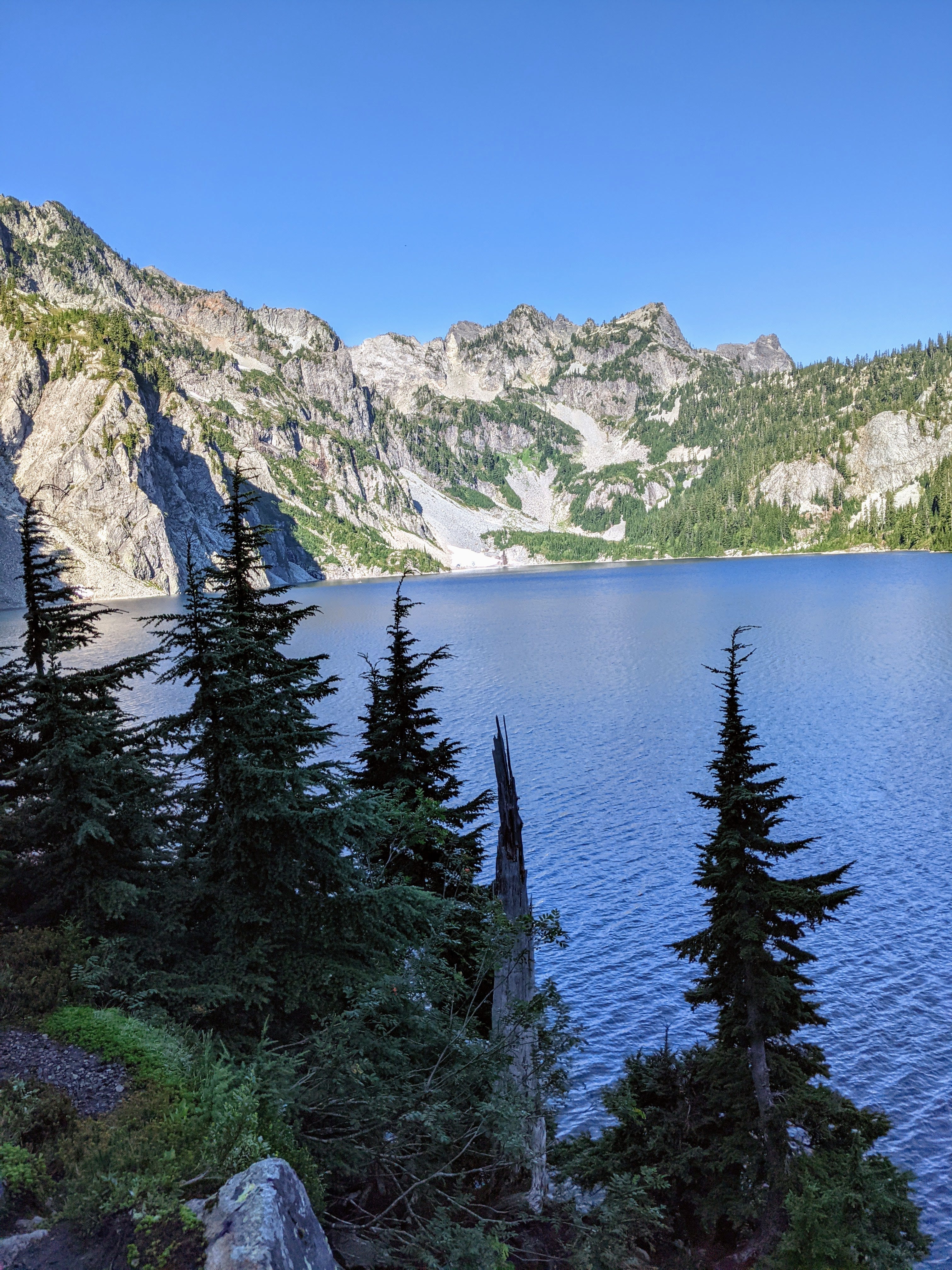
I remember thinking that speaking out loud would break something. Not because silence was mandated, but because presence was. The air felt thick with attention. I became careful with my movements, my breath, my voice. It was not a question of whether I belonged there. It was a question of who I needed to be to remain.
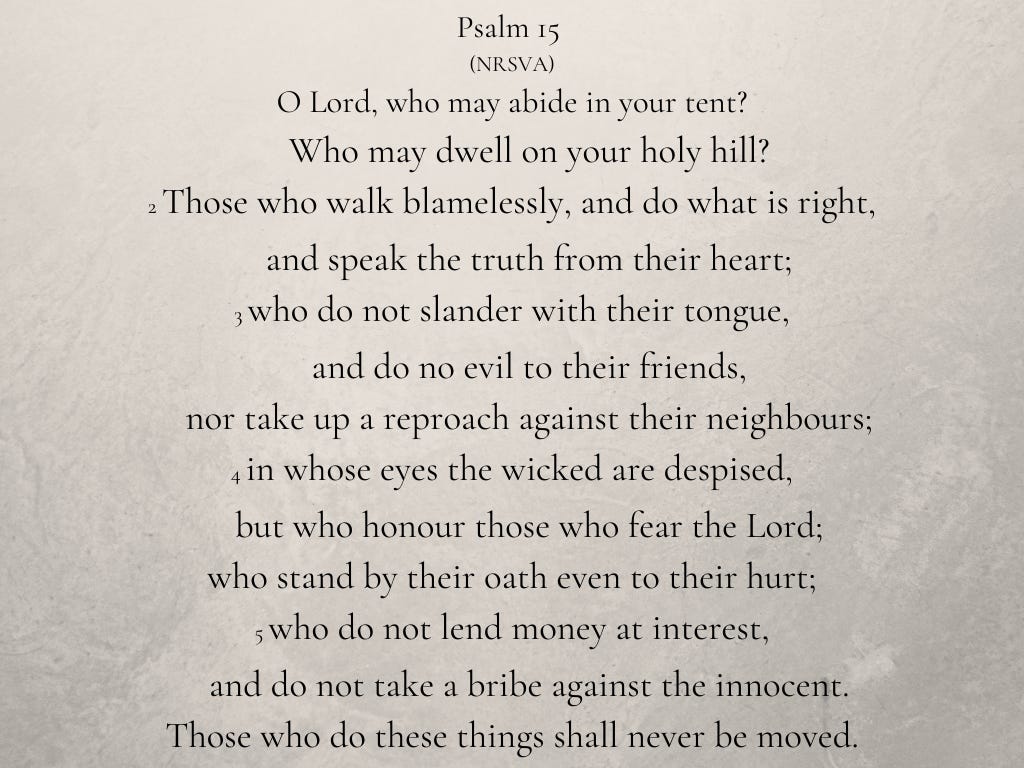
Psalm 15 opens with a question like that. “O Lord, who may abide in your tent? Who may dwell on your holy hill?” It is a question about nearness. About what kind of life can bear the weight of God’s presence without fracture.
Psalm 15 is not a checklist to pass. It is a portrait of what God made human beings to be.
The psalm’s answer is almost disarmingly plain. It does not mention sacrifice, belief, lineage, or religious performance. It speaks instead of integrity. Of walking blamelessly. Of doing what is right. Of speaking truth from the heart. Of refusing to wound a neighbor with words. Of honoring what is good even when it brings no advantage. Of keeping one’s word when it costs something. Of refusing profit that depends on another person’s vulnerability.
This is not private morality. It is relational, economic, and social. It assumes that faith has consequences that ripple outward, shaping how power is held, how money moves, and how promises are kept. God’s presence, the psalm insists, cannot be separated from justice.
In my past, I learned how to live divided. I learned how to assent outwardly while dissenting inwardly. I learned how to ignore my own inner voice in order to remain acceptable. That division felt like suffocation. A slow constriction of breath that came from saying yes with my mouth while something deeper in me said no.
In churches shaped by hierarchical theologies, the kind I attended, this division is often sanctified. Women, especially, are taught that faithfulness looks like a specific, prescribed role. Obedience is framed as staying silent. Holiness is equated with staying within boundaries set by patriarchy. Keeping one’s place is praised as godly even when it causes harm. Those in power benefit when women keep to roles that cost them their wholeness. The cost is named virtue. The harm disappears beneath spiritual language.
Psalm 15 does not bless that arrangement. It does not confuse righteousness with compliance. It names integrity as alignment. Inner and outer life held together. Speech that arises from truth rather than convenience. Faith that refuses to profit from another’s diminishment, whether that profit comes in the form of money, status, or control.
The psalm ends with a promise that feels almost understated. “Whoever does these things shall never be moved.” This is not a guarantee of ease. It is a claim about stability. A life rooted in truth may lose approval. It may lose belonging. It may lose the shelter of systems that reward silence. But it does not lose its footing.
I think again of Snow Lake. Of how nothing needed to be proven there. How presence itself was enough to call forth care, restraint, alignment. Nothing had to be performed. Nothing had to be defended. What remained was solid ground beneath my feet.
Psalm 15 tells the truth without apology. Nearness to God is not sustained by performance. It is sustained by integrity. And a life that refuses division, even when it costs something, stands.
Thank you for reading. If you’d like to support this work, the best ways are to subscribe (free or paid), share the newsletter with someone who might enjoy it, leave a comment, or buy me a coffee. Your presence here means more than you know.
With love,
Dawn
So much truth in these words. I love how we each have different gifts that allow us to share the word in different ways. Some from a pulpit, some with their actions, some with their writing, and some, like trees around lakes, just by standing still.
Love this!