

The Protest
short story / memoir

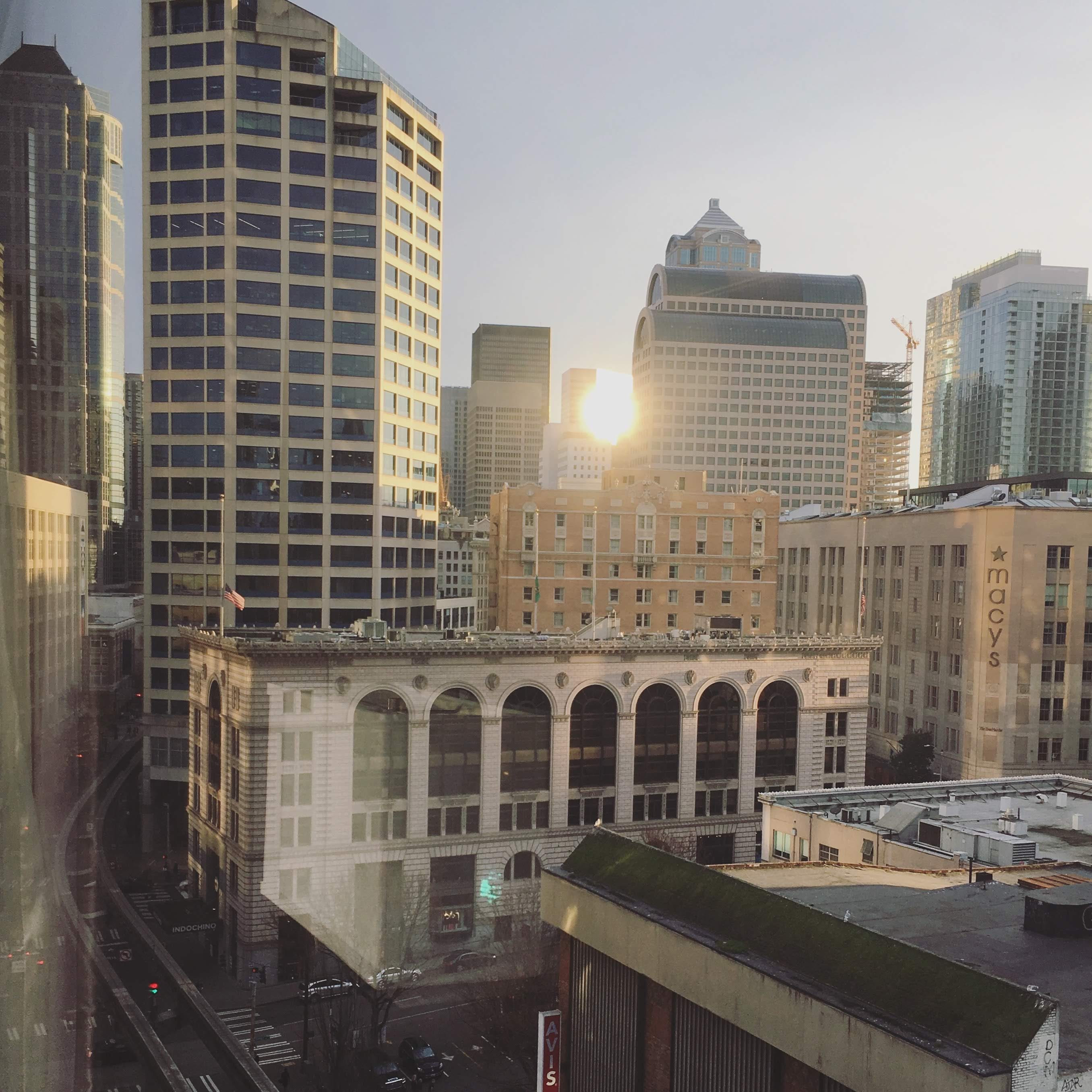
I hesitate before crossing the street, avoiding the space between a young group of friends holding signs and a guy snapping their picture with his phone. Determinedly, I shove my own phone in my pocket, making a silent vow to leave it there. We’re not here for social media validation. Well, perhaps some are.
The cool afternoon air feels heavy and damp, and I find solace in the cloth mask covering my nose and mouth, as it provides a modicum of warmth, anonymity, and, hopefully, protection. Breaking quarantine for this moment adds to the weight of the experience. The crowd surges forward along the street where I stood to observe the Christmas parade six months ago. Wading out into the river of people, I'm enveloped in its strong current, carried by its collective energy. Barriers block every side street like rocks and obstacles in the river's path. I scan the turbulent waters for an escape route.
Car horns beep. A call and response bounces among us. “Ain't no power like the power of the people, 'cuz the power of the people won't stop!”
The tall buildings are a forest, their towering forms resembling ancient trees along the riverbanks. As we go deeper into this urban wilderness, the sky grows darker, as if the river has led us into the depths of a mysterious and uncharted territory. Signs bob above the people; the one I’m following reads, “We all bleed the same color.” The uniformed observers of this parade hold guns. They, too, are masked, but I see their eyes. Their eyes speak volumes: fear, defiance, confusion. I imagine my own eyes mirror theirs. Some of them wave or give a friendly head nod as if to say, “Hey, I’m with you.”
I offer a tentative smile, concealed by my mask, making eye contact, attempting to communicate that I'm not here to cause trouble.
How did we get here? Are there good guys and bad guys in this story? And what am I? They wear my country’s flag on those uniforms. Aren’t we on the same side? The water is churning, dark, and muddy.
As we reach a clearing, my hand reaches for his, holding tight as the crowd condenses around a stone building, causing a pause in the river's flow. Finding a spot on the pavement, we sit and listen. Now stationary, I scan the crowd, searching for my son. Faraway voices, muffled and scratchy, give speeches over a bullhorn. Closer to me, people angrily shout like the turbulent rapids of the river. Others reply, “Let her talk!” Their voices mingle like the confluence of different tributaries.
There he is, with his friends--good kids. Tears prick my eyes. The river seems clearer now. I know why I’m here. My son. “He’s over there,” I say to my husband.
We both remain alert. While we're on the periphery, our boy is in the thick of the crowd. I think most of us are here for love. What, if not love, could propel so many to take the personal risks they did to be here? Our anger is righteous, and we want justice. But all it takes is one angry spark to ignite a fire we can’t control, like a wildfire spreading along the riverbanks, altering its course and leaving lasting scars on its landscape.
“I want to be on the right side of history.”
My seventeen-year-old son’s words echoed in my mind as I sat on the curb, straining to hear what the mayor of Seattle was saying to the angry swarm in front of the courthouse. In the little snatches of speech I catch, she sounds like a mama bear who doesn’t want anyone to get hurt. It seems we’re here for the same reason, standing on the banks of this turbulent river.
***
Yesterday, he approached me, “There’s a protest downtown tomorrow over the murder of George Floyd. Can I go?”
The following decision felt like navigating through the tangled underbrush of a dark forest, a path shrouded in uncertainty.
He didn't have to ask for my permission. I wouldn't have asked at his age, but he did, and my heart swelled with pride. The question of being on the right side of history hung heavily in the air, an unspoken pact between mother and son. We both believed that in the face of cruel, systematic racism, the answer was evident: use your voice to speak for the oppressed. I was glad we shared the same values.
How could I say no? The thought was a boulder in my chest, heavy and unyielding.
How could I say yes?
Did he know the danger? His blue eyes pleaded with me like a lone bird's call echoing through the forest's silence. “I promise I’ll be careful.”
What does it mean to be on the right side of history? And who was on the wrong side? When I think of evil events from the past, the question nags: why did so many good people remain quiet? I would hope, in the face of evil, I would have the courage to speak out against it.
Scenes from the W.T.O. riots in Seattle back in '99, during my own youth, flickered in my mind like distant shadows. I’d yearned to be there, to stand in solidarity with those protesters, to be on the right side of history. But life had led me to a different path, miles away from the river's course. The protestors' message, "people over profits," had been muddied by a few anarchists descending upon downtown, and, together, with a poorly executed police response, they turned part of Seattle into a war zone under a state of emergency. The National Guard had to come in to restore order.
I wasn't in the city when it happened but was a captive audience to the tumultuous aftermath through the relentless news coverage. The vivid images of broken glass, smoldering vehicles, and the devastation of property left a permanent scar. The movie "Battle in Seattle" etched the chaos into my memory. Tear gas, mass chaos, brutal beatings, and unjust arrests were not scenes I wanted my son to be a part of, regardless of his pure-hearted intentions. I feared for him, knowing how easily the forest could be set ablaze, obscuring his path in its smoky depths.
More recent images, especially those of George Floyd, his neck beneath the knee of a cruel figure wearing a police uniform, reignited the flames of justice within me. His haunting cry for his mother in his final moments resonated with many, including me. What happened to him was evil.
“Yes, you can go.” I paused, my heart heavy with the gravity of my decision. “But I’m going too. And you should come home before it gets dark.” I knew this decision was leading us deeper into a forest of uncertainty.
What could I possibly do to protect him? He’s bigger and stronger than I am. Yet I know I have something fierce inside of me. I’m a mother bear. My son did an admirable job of concealing his objection to my presence, his expression revealing nothing but the polite respect he held. No seventeen-year-old boy desires his mother to accompany him to a protest, but he swallowed his objections, and for that, my heart swelled with gratitude.
I reassured him, “Don’t worry. I’ll be there, but not in your way. I’m not going to hang out with you and your friends. I’ll do my own thing. I just want to be close, in case something happens.”
This was when my husband, who’d been listening all along, got involved. “Well, if you’re going, I’m going.” His protective stance mirrored the strength of a father bear.
My protector. I’d smiled in response, my heart warm with gratitude.
***
Now, I stand on the edge of the crowd by the courthouse as a bitter cold wind slices through me, sending shivers down my spine and yanking me back to the harsh reality of the moment. The presence of a policeman nearby intensifies my state of disquiet, his uniform symbolizing authority and uncertainty all at once. Above us, the relentless roar of helicopters drowns out our thoughts while a television news crew looms across the street, capturing every moment of this tense gathering.
Derek, my husband, leans over and speaks, “I think it’s going to be okay. Maybe we should start walking back to our car. It’s getting late.”
I wait and watch as he texts our son. My eyes strain to locate him in the distant sea of faces. Far away, amid the crowd, I see him lift his phone to read his dad’s message. Shortly, he sends his reply; he’ll get a ride back with his friends.
I glance over my shoulder after we stand and split away from the crowd. We head back the way we came from. Hope wells in me, and emotion tinges my voice as I gesture backward, “I love those kids. I think our future is in good hands.”
I silently offer up a prayer of protection, not just for my son but for every person in that crowd, hoping their determination leads to change.
We walk quickly, second-guessing our decision to take a shortcut, as we delve further into the heart of the urban jungle. Barriers block our path, forcing us into unfamiliar territory. The navigation on our phones becomes an unreliable guide, leading us astray, adding extra miles to our journey as we struggle to find the right path. We are now swimming against the tide. We pass more soldiers, their armored presence a stark reminder of the underlying tension. Darkness creeps closer, casting a foreboding shadow.
Finally, after safely arriving home, I ponder the weight of this day and its potential impact on my son. It feels like an indelible moment, and it seems right that he was a part of it. While the atmosphere at the protest was tense, it remained peaceful while we were there. I don’t let my guard down until my son is safely home.
As promised, he isn’t far behind. I greet him with a casual wave, concealing the relief that surges within me as if this were just another ordinary night and he has returned from a mundane outing at the movies.
***
Were we on the right side of history that day? The question continues to gnaw at my soul years later. The answer seems to depend on the storyteller. I remember silently judging the protestors taking pictures for their social media accounts. Now I wonder if I’d been too harsh. True to my hasty vow, I kept my phone in my pocket. People who weren’t present spun false narratives of what happened at those protests to fit their agenda, and I was judged negatively for my participation. I have no pictures. I have nothing other than my words to counter the lies.
The summer of 2020 was a time when many rivers converged. The raging waters took on a name: #BlackLivesMatter. Most of the protests in this convergence remained peaceful, but not all. The river was muddy. Terms like thugs, terrorists, and looters were applied indiscriminately to anyone in the river. The actions of a few tainted the water. I was there, and I embody none of those labels. I still believe the majority were there for love.
History continues its course, prompting me to reflect. Did our voices make a difference? I sincerely hope so. I will never regret standing up for the oppressed.
The path ahead remains uncertain, yet our family persists in navigating the unpredictable waters of change, aspiring to leave a positive imprint on history.

Exciting news! My serial novel, Cascading Courage, has launched. This dual-timeline story unfolds between the 1990s and 1930s, weaving together themes of friendship and the fight for justice. It will be released in 40 weekly installments on Mondays between February and the end of 2025. The first chapters have already been published, but you can join anytime by upgrading your subscription and catching up in the archives, ensuring you don’t miss anything.
This newsletter occasionally contains Amazon affiliate links. If you click on and buy through one of these links, I receive a small percentage at no extra cost. Thank you.
Quick Links:
May the peace of the Lord Christ go with you wherever he may send you; may he guide you through the wilderness; protect you through the storm; may he bring you home rejoicing at the wonders he has shown you; may he bring you home rejoicing: once again into our doors.
It’s crazy that those days of protest are now “history,” and yes, you and your son were on the right side. I love that he wanted to go and you wanted to be by his side.
Dawn! I have full body chills. I love the strength and clear-eyes sense of justice in you.